 ultimate-guide
Long Term Relief for Back Pain: A 2026 Guide
Table of Contents
- Why Back Pain Keeps Coming Back
- Benefits of Chiropractic Care for Back Pain
- Physical Therapy Exercises for Back Pain
- How to Prevent Chronic Back Pain
- Long Term Relief for Back Pain: Building Your Maintenance Plan
- The Mind-Body Connection in Lasting Pain Relief
- When to See a Doctor for Back Pain
- Conclusion: Your Next Step Toward Lasting Relief
- Frequently Asked Questions
Last Updated: September 16, 2026
Why Back Pain Keeps Coming Back
Most people treat back pain like a fire alarm: they silence it and move on. That approach explains why the problem returns. According to the National Institute of Neurological Disorders and Stroke, low back pain is one of the most common reasons adults seek medical care, and a large share of cases recur within a year of the first episode. The distinction that matters is acute vs. chronic: acute pain lasts days to weeks and usually settles on its own, while chronic pain persists beyond three months and involves changes in how the nervous system processes signals.
That is the core argument of this guide: long term relief for back pain rarely comes from a single treatment. It comes from a plan that addresses the muscles, joints, daily habits, and stress responses feeding the problem. Below, we break down the conservative, noninvasive options that actually hold up over time, and how to build a maintenance routine you can sustain.
Benefits of Chiropractic Care for Back Pain
Chiropractic care for back pain focuses on restoring normal motion in the spine and reducing the muscle guarding that follows injury. A typical visit involves a thorough history, posture checks, range of motion testing, and hands-on adjustments to areas that have lost mobility.
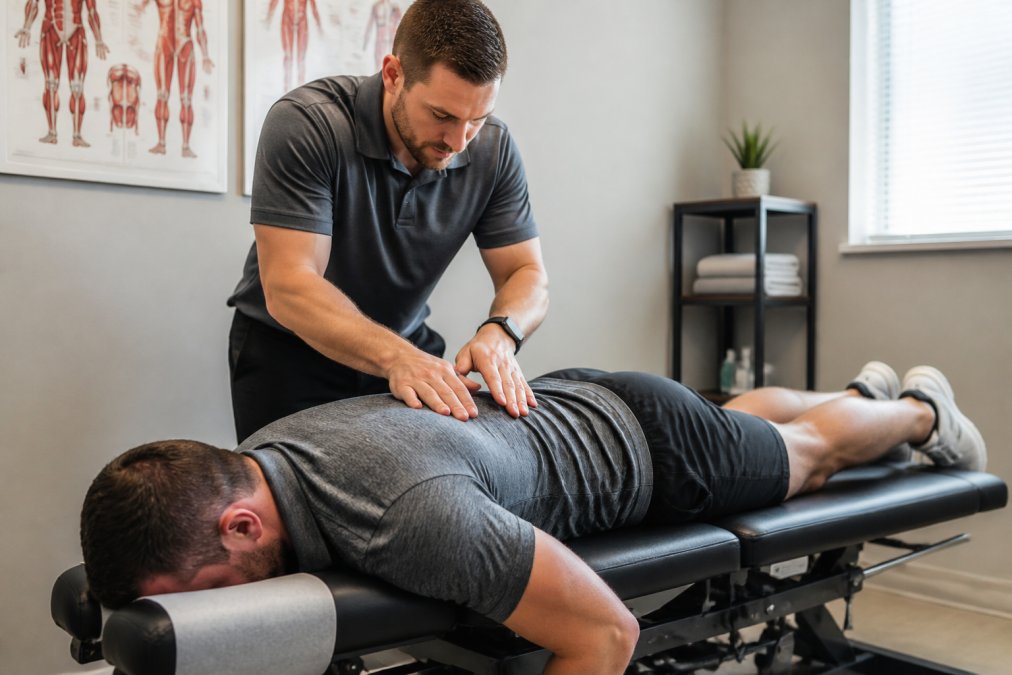
What most guides miss is that the adjustment itself is only part of the benefit. The bigger gains come from what happens between visits: better spinal alignment during the day, less compensatory tension in surrounding muscles, and a clearer picture of which movements provoke pain.
Research from the American Chiropractic Association notes that chiropractic care is widely used as a conservative, noninvasive option for musculoskeletal pain, often alongside physical therapy and lifestyle changes rather than instead of them. That combination approach is where results tend to stick.
A common mistake is expecting one adjustment to fix a problem that took years to develop. In practice, meaningful change often takes a series of visits plus consistent home work.
Physical Therapy Exercises for Back Pain
Physical therapy exercises for back pain work by targeting the muscles that support the spine, not just the spot that hurts. A well-designed program builds what clinicians call a "core cylinder": the deep abdominal muscles, the multifidus along the spine, the glutes, and the diaphragm working together to brace the trunk before you move. When that cylinder is weak, the lumbar joints and discs absorb forces they were never meant to carry.
A common pattern in rehab is a three-phase progression. Skipping phases is the most frequent reason home programs stall.
Phase 1, Pain control and activation (roughly weeks 1-2)
- Diaphragmatic breathing: 5 minutes, twice daily. Lie on your back, place one hand on your ribs, and breathe so the ribs expand sideways rather than the belly rising. This re-engages the diaphragm as a core stabilizer.
- Pelvic tilts: 2 sets of 10, slow. Flatten the lower back toward the floor, hold 3 seconds, release.
- Dead bugs: 2 sets of 6 per side. Keep the lower back pressed down while extending the opposite arm and leg.
Phase 2, Stabilization (roughly weeks 3-6)
- Bird dogs: 2 sets of 8 per side, holding each rep 5 seconds. The hold is where the multifidus does its work.
- Glute bridges: 2 sets of 12. Squeeze the glutes at the top for 2 seconds; if the hamstrings cramp, you are pushing through the wrong muscles.
- Side planks (knees down first): 3 holds of 15-20 seconds per side.
Phase 3, Load and function (week 6 onward)
- Front planks: build from 20 seconds toward 60 seconds over several weeks.
- Hip hinges with a dowel: 3 sets of 10. The dowel touches your head, upper back, and tailbone throughout, if it loses contact, you are rounding.
- Split squats and step-downs: 2 sets of 8 per leg to train the back to tolerate real-world loading.
A few parameters matter more than the exercise list itself. Ten minutes daily outperforms an hour once a week, because tendon and muscle adaptation responds to frequency. Mild soreness that fades within 24 hours is normal; sharp pain during a rep is a signal to stop and regress. If a movement makes symptoms travel down the leg, that is a reason to pause and get assessed rather than push through.
If you are coming from a desk job, expect the first two weeks to feel awkward as your body relearns patterns. That awkwardness is coordination, not failure.
How to Prevent Chronic Back Pain
Preventing chronic back pain comes down to activity modification and daily habits, not dramatic interventions. The shift from acute to chronic pain often happens quietly, through months of small stresses that never fully resolve. What most guides skip is the how, the specific daily and weekly cadence that keeps a back resilient. That cadence is the gap this section fills.
The daily reset (every 30-45 minutes of sitting)
Set a timer. When it goes off, stand, walk for 60-90 seconds, and run through a 30-second posture reset: chin tucked, shoulder blades slid down and back, ribs stacked over pelvis. The mechanism is simple, sustained sitting loads the discs and shuts down the deep stabilizers, and brief frequent interruptions restore both. One long stretch at lunch does not undo eight hours of static loading.
The ergonomic baseline
Screen at eye level, feet flat, elbows near 90 degrees, and lumbar support that fills the natural curve of your lower back. If you work from a laptop, a separate keyboard and a riser matter more than an expensive chair. Recheck your setup quarterly, ergonomic drift is real and gradual.
The weekly movement floor
Aim for at least 150 minutes of moderate activity per week, which is the general public health recommendation for adults (the CDC). Walking, swimming, and cycling all count.
The lifestyle levers that actually move the needle
- Weight management: excess body weight increases compressive load on the lumbar spine with every step.
- Smoking: nicotine constricts blood vessels and impairs tissue healing, which slows recovery from every strain.
- Sleep: poor sleep raises pain sensitivity the next day, which lowers your tolerance for activity and starts a downward spiral.
- Stress: sustained stress keeps muscles guarded and lowers pain threshold, see the mind-body section below.
The relapse pattern to watch for
Long Term Relief for Back Pain: Building Your Maintenance Plan
Long term relief for back pain depends on a maintenance plan you can actually follow. Treatment gets you out of pain. Maintenance keeps you there.
| Frequency | Activity | Purpose |
|---|---|---|
| Daily | 10-minute core and mobility routine | Maintain strength and range of motion |
| 3x per week | 20-30 minute walk or swim | Low-impact conditioning |
| Every 4-6 weeks | Chiropractic or therapy check-in | Catch compensations early |
| Quarterly | Reassess posture and workspace | Prevent ergonomic drift |
The Mind-Body Connection in Lasting Pain Relief
Stress and pain share the same circuitry. When the brain stays in a heightened state, pain threshold drops and muscles stay tense, which keeps the cycle running. This is the pain-brain connection, and it explains why some backs hurt long after tissue has healed.
When to See a Doctor for Back Pain
See a doctor promptly if back pain follows a fall or accident, comes with numbness in the groin or legs, causes weakness, or is accompanied by fever or unexplained weight loss. These are red flags that need medical evaluation, not conservative care.
Conclusion: Your Next Step Toward Lasting Relief
Back pain that keeps returning is a signal, not a life sentence. The fix is rarely one treatment. It is a plan that combines hands-on care, therapeutic exercise, ergonomic adjustments, and stress management, reviewed and adjusted over time.
Frequently Asked Questions
What is the most effective long-term approach for managing chronic back pain?
A combination of chiropractic care, targeted physical therapy exercises, and lifestyle adjustments works best. Chiropractic care helps restore spinal alignment, while physical therapy exercises strengthen core muscles and improve range of motion. Preventing chronic back pain also involves posture checks, ergonomic adjustments, and regular movement breaks. A multidisciplinary approach that includes patient education and a personalized pain management plan leads to functional recovery and lasting relief.
Can physical therapy exercises for back pain provide permanent relief?
Physical therapy exercises for back pain can significantly reduce pain and prevent recurrence by building core strength and improving flexibility. However, permanent relief depends on consistency and addressing root causes like poor posture or muscle imbalances. Combining therapeutic exercise with chiropractic care and lifestyle modification offers the best chance for long-term relief. Always consult a qualified professional before starting a new exercise routine.
How does massage therapy contribute to long-term back health?
Massage therapy helps reduce muscle tension, improve circulation, and decrease inflammation, which supports long-term back health. It can also enhance the effects of chiropractic adjustments and physical therapy by relaxing tight muscles before and after treatment. Regular massage, combined with core strengthening and ergonomic adjustments, can reduce the frequency of pain flare-ups and support a pain management plan focused on preventative care.
What lifestyle changes are essential for long-term back pain prevention?
Key lifestyle changes include maintaining a healthy weight to reduce spinal load, practicing good posture during sitting and lifting, and staying active with low-impact exercises like walking or swimming. Ergonomic adjustments at work, such as using a lumbar support cushion and adjusting your chair height, also help. Incorporating deep breathing techniques and stress management can further reduce muscle tension. These habits, along with regular chiropractic check-ups, support long term relief for back pain.