 listicle
Natural Alternatives to Back Pain Surgery That Work
Table of Contents
- Why Consider Natural Alternatives to Back Pain Surgery
- Chiropractic Care for Herniated Discs: What to Expect
- The Benefits of Physical Therapy for Back Pain
- Exercises to Avoid Back Surgery: A Targeted Home Routine
- Complementary Therapies That Support a Holistic Approach
- Lifestyle Adjustments for Long-Term Relief
- When to Stop Natural Treatments and See a Surgeon
- Frequently Asked Questions
Last Updated: October 4, 2026
Why Consider Natural Alternatives to Back Pain Surgery
Most people facing a spine surgeon's recommendation want to know one thing first: is there another way? Natural alternatives to back pain surgery are conservative treatments, including chiropractic care, physical therapy, acupuncture, and lifestyle changes, that address the causes of spinal pain without an operation. For many patients, they work.
At Family Chiropractic Plus, we have spent over 23 years of international and domestic practice experience helping people explore that question before they commit to an operating room. The National Center for Complementary and Integrative Health notes that most adults experience low back pain at some point, and that non-surgical approaches are often tried first.
The Case for Conservative Treatment First
Surgery carries real risks: infection, scar tissue, failed fusion, and a recovery measured in months. Conservative treatment carries far fewer. That is why most clinical guidance starts with non-surgical care before anyone picks up a scalpel.
A common approach is to give structured conservative care a fair trial, often several weeks, before considering an operation. Many patients improve enough during that window that surgery stops being necessary.
Who Is a Good Candidate for Non-Surgical Care?
Good candidates for non-surgical care typically have mechanical back pain, pain that moves with posture and activity, without progressive weakness or loss of bladder or bowel control.
If you have a herniated disc pressing on a nerve, that does not automatically mean surgery. Many herniated discs improve with time and the right rehabilitation plan.
Chiropractic Care for Herniated Discs: What to Expect
Chiropractic care for herniated discs focuses on restoring joint motion, reducing muscle guarding, and taking pressure off irritated nerves. A typical plan combines gentle spinal adjustments and home exercises, not a single crack and a goodbye.
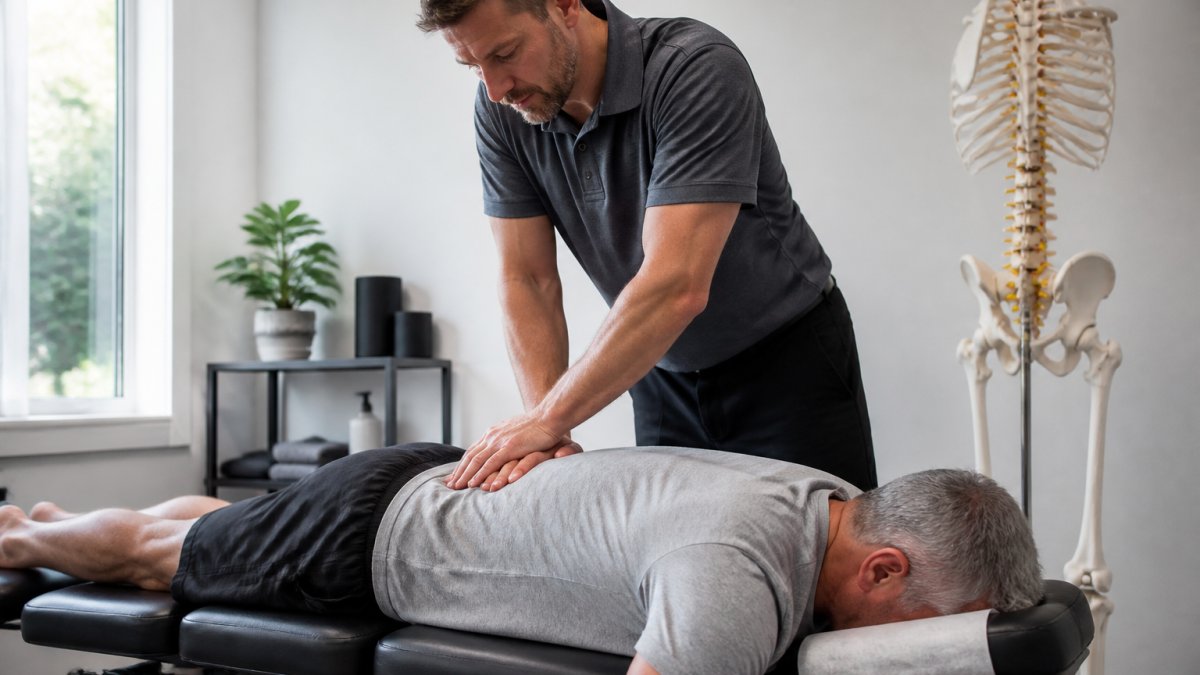
If you have ever felt rushed through a five-minute adjustment, that is not what good care looks like. A thorough exam should come first.
How Spinal Adjustments and Decompression Work
Manual adjustments then restore mobility to joints that have stiffened around the injury.
What the Research Says About Chiropractic Outcomes
Chiropractic care is one of the most studied conservative options for back pain. The American Chiropractic Association points to research showing that many patients with acute and chronic low back pain report meaningful relief with spinal manipulation. Outcomes vary by patient, and results are best when chiropractic is paired with active rehabilitation rather than used alone.
The Benefits of Physical Therapy for Back Pain
Physical therapy for back pain builds the strength and control your spine needs to stay stable. Where an adjustment restores motion, therapy teaches your muscles to keep it. That combination is why the two work so well together.
Core Stabilization and Functional Movement Training
Core stabilization targets the deep muscles that wrap around your spine. Functional movement training then teaches those muscles to work during real activities, like lifting a box or getting out of a chair. The goal is a spine that tolerates daily life, not one that only feels good on a table.
How PT Complements Chiropractic Care
Chiropractic restores alignment and mobility. Physical therapy builds the strength to hold that alignment. Patients who do both tend to keep their gains longer than those who rely on either one alone.
Exercises to Avoid Back Surgery: A Targeted Home Routine
Exercises to avoid back surgery are not complicated. They are consistent. The routine below takes about 15 minutes and targets mobility restoration, core control, and posture correction.
Step-by-Step: 5 Exercises for Mobility Restoration
- Pelvic tilts (2 sets of 10): Lie on your back, flatten your lower spine into the floor, hold 5 seconds.
- Cat-cow (10 slow reps): On hands and knees, alternate arching and rounding your spine.
- Bird-dog (3 sets of 8 per side): Extend opposite arm and leg while keeping your core braced.
- Glute bridges (2 sets of 12): Lift your hips while squeezing your glutes, not your lower back.
- Knee-to-chest stretch (30 seconds per side): Gently pull one knee toward your chest.
Expected result: Improved mobility and less morning stiffness within a few weeks of daily practice.
Common Mistakes That Worsen Pain
The biggest mistake is pushing through sharp pain. Discomfort from stretching is normal; a shooting pain down your leg is not. Other common errors include holding your breath during core work, skipping warm-ups, and doing too much too soon.
Complementary Therapies That Support a Holistic Approach
A holistic approach to back pain combines hands-on care with therapies that calm the nervous system. No single treatment does everything, but together they cover more ground. The key is knowing what each therapy actually does, how often to use it, and how it fits alongside the chiropractic and physical therapy work already in your plan.
Acupuncture, Massage, and Myofascial Release
Massage therapy works on muscle tension and trigger points that keep pain cycling. A common pattern is one session per week for four to six weeks, then tapering to maintenance visits.
The National Institute of Arthritis and Musculoskeletal and Skin Diseases notes that back pain has many causes, which is why a combination of therapies often helps more than one alone.
Mindfulness and Biofeedback for Chronic Pain Management
Chronic pain has a mental component. Stress tightens muscles, and tight muscles feed pain.
How These Therapies Fit With Your Other Care
These therapies are not a separate track from chiropractic or physical therapy. They are support. Massage can reduce pain enough that you can complete your home exercises. The goal is a plan where each piece makes the others work better, not a stack of unrelated appointments.
What the Evidence Suggests About Combining Therapies
Research on conservative care generally supports a multimodal approach, meaning more than one therapy at a time, over any single method used alone. That does not mean every combination works for every condition. A herniated disc with nerve compression may respond differently than chronic muscular strain.
Lifestyle Adjustments for Long-Term Relief
Treatment gets you out of pain. Lifestyle keeps you there. Two changes matter more than the rest: what you eat and how you sit. But the details are where most people stall, so here is what actually changes outcomes.
Anti-Inflammatory Diet and Ergonomic Adjustments
An anti-inflammatory diet emphasizes omega-3 fats from fish, walnuts, and flaxseed; colorful vegetables and fruit; whole grains; and lean protein.
Ergonomic adjustments remove the daily strain that keeps inflammation alive. Raise your monitor to eye level, keep your feet flat, support your lower back with a cushion or chair curve, and keep your elbows near ninety degrees.
| Adjustment | Why It Helps | How Often |
|---|---|---|
| Anti-inflammatory diet | Lowers systemic inflammation | Daily |
| Ergonomic desk setup | Reduces postural strain | Set up once, check monthly |
| Movement breaks | Prevents stiffness buildup | Every 30-45 minutes |
| Heat or cold therapy | Manages flare-ups | As needed |
Heat and Cold Therapy Applications
Cold therapy reduces swelling and numbs acute pain in the first 48 hours after an injury.
The rule is simple: cold for new, hot for old. If you are unsure which you are dealing with, cold is the safer default in the first two days.
How Lifestyle Changes Support the Decision About Surgery
This is where lifestyle care connects to the bigger question. A patient who improves with diet, ergonomics, and movement breaks may never need an operation. A patient whose pain is driven by a structural problem, such as a disc pressing on a nerve, may do everything right and still need surgical evaluation. Lifestyle changes are not a test you pass or fail.
Give lifestyle changes a fair trial of at least four to six weeks, track your pain and function, and bring that record to your next appointment. That record is what turns a vague "I feel a little better" into a decision your care team can act on.
When Lifestyle Alone Is Not Enough
If pain is progressing, if you are losing strength, or if you have numbness in the saddle area or loss of bladder or bowel control, lifestyle changes are not the answer and you need urgent evaluation. For everyone else, the goal is to stack these habits on top of active care and see how far they take you before surgery becomes the conversation.
When to Stop Natural Treatments and See a Surgeon
Natural treatments have limits, and knowing them protects you. If symptoms are progressing rather than improving, conservative care is no longer the right path.
Red Flags You Should Never Ignore
Seek immediate medical evaluation if you experience loss of bladder or bowel control, progressive weakness in your legs, numbness in the saddle area, or pain following a significant trauma. These signs suggest nerve compression that needs urgent attention. Fever, unexplained weight loss, or a history of cancer with new back pain also warrant prompt evaluation.
Integrating Natural Care with Conventional Medicine
Conservative treatment and conventional medicine are not opposites. Many patients use chiropractic and physical therapy alongside their physician's care, and some eventually need surgery despite everyone's best efforts. That is not a failure.
Chronic back pain wears you down, and the decision between surgery and conservative care is one you should not make alone. At Family Chiropractic Plus, our team combines chiropractic care, massage therapy, and comprehensive physical therapy, along with nutritional counseling, into a personalized plan built around your body and your goals.
Frequently Asked Questions
What can you do instead of back surgery?
Several non-surgical options can help manage back pain. Chiropractic care for herniated discs uses manual adjustments to restore joint function. Physical therapy for back pain focuses on core stabilization and functional movement. Massage therapy and an anti-inflammatory diet can also reduce pain and inflammation. Many people combine these approaches for a holistic plan. A qualified practitioner can help determine which options suit your specific condition.
How does chiropractic care help prevent the need for back surgery?
Chiropractic care addresses spinal misalignments and muscle tension that contribute to nerve pain and restricted mobility. By restoring proper joint motion and reducing pressure on discs, it can create an environment where the body heals without surgical intervention. Research shows that many people with herniated discs or sciatica experience significant relief through conservative treatment. Regular chiropractic visits, combined with therapeutic exercise, often improve function enough to avoid surgery.
Can physical therapy replace the need for spinal surgery?
For many cases of mechanical back pain, physical therapy can be a successful alternative to surgery. A structured program of core stabilization, stretching, and posture correction strengthens supporting muscles and reduces stress on the spine. Studies indicate that physical therapy for back pain often matches surgical outcomes for conditions like spinal stenosis and degenerative disc disease. However, severe structural damage or progressive neurological deficits may still require surgical evaluation.
What are the most effective exercises to avoid back surgery?
Exercises that focus on core stabilization, flexibility, and functional movement are key. Examples include pelvic tilts, bird-dog, glute bridges, and gentle hamstring stretches. These moves improve mobility restoration and reduce strain on the lower back. Start slowly and avoid any exercise that increases sharp pain. A physical therapist or chiropractor can tailor a routine to your condition and ensure you perform each movement safely.
When should you consider surgery versus natural pain management?
Surgery may be necessary if you experience red flags such as loss of bladder or bowel control, progressive muscle weakness, or severe pain that persists despite months of conservative care. For most other cases, a trial of non-surgical treatments like chiropractic, physical therapy, and lifestyle adjustments is recommended first. Always discuss your symptoms with a qualified healthcare provider to determine the safest path forward.